Case 03 · UFG Talent Matching — AI · Matching Systems · Enterprise
Designing a Talent-Matching Ecosystem for a Large University
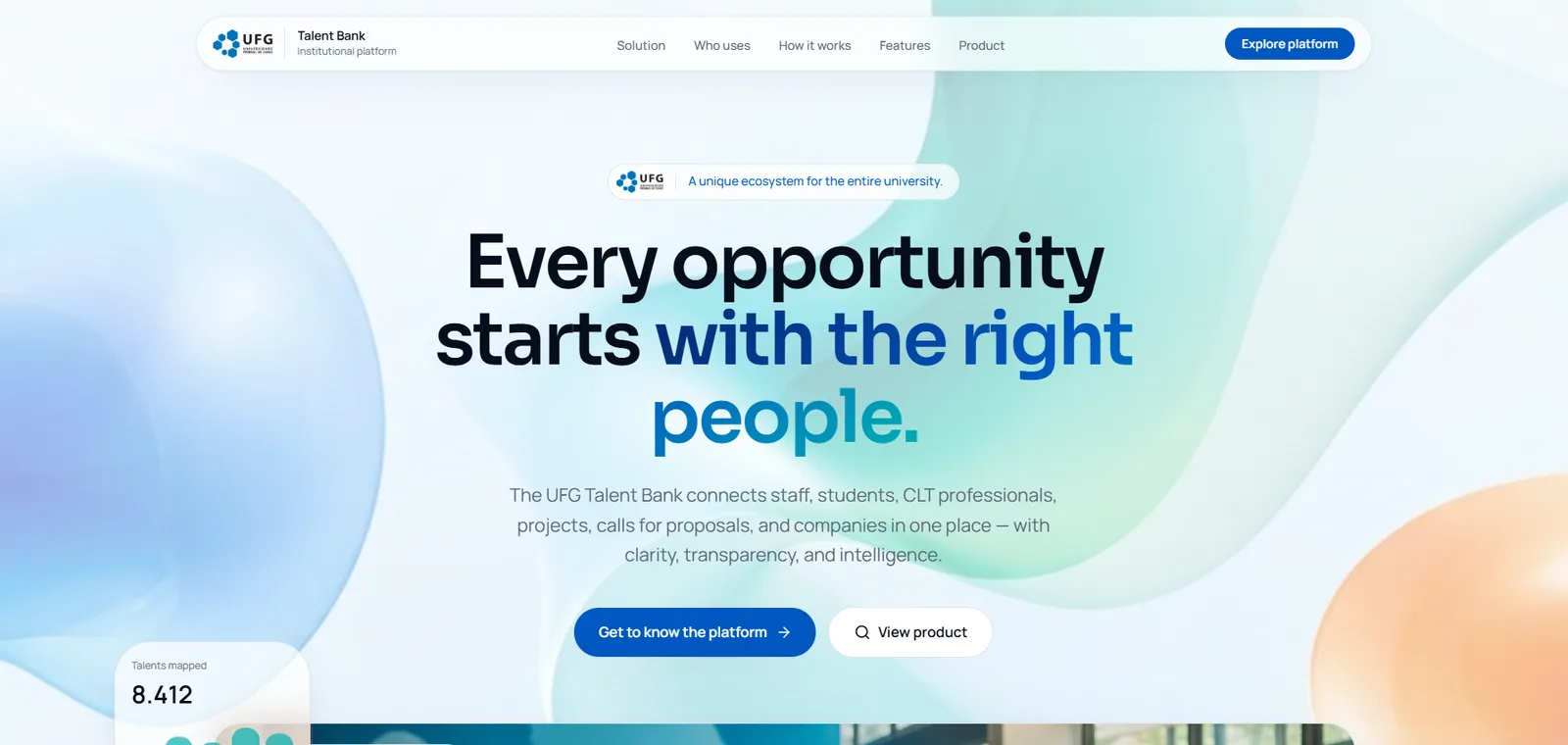
A talent discovery and matching platform designed to make expertise inside a large, heterogeneous institution discoverable, structured and explainable.
- Role
- Lead Product Designer
- Category
- AI · Matching Systems · Enterprise
- Status
- Designed and developed
- Project
- Visit project Interface in Portuguese — built for Brazilian public-sector institutions
- Talent
- AI
- Matching
- Search
- Enterprise UX
- Marketplace
Overview
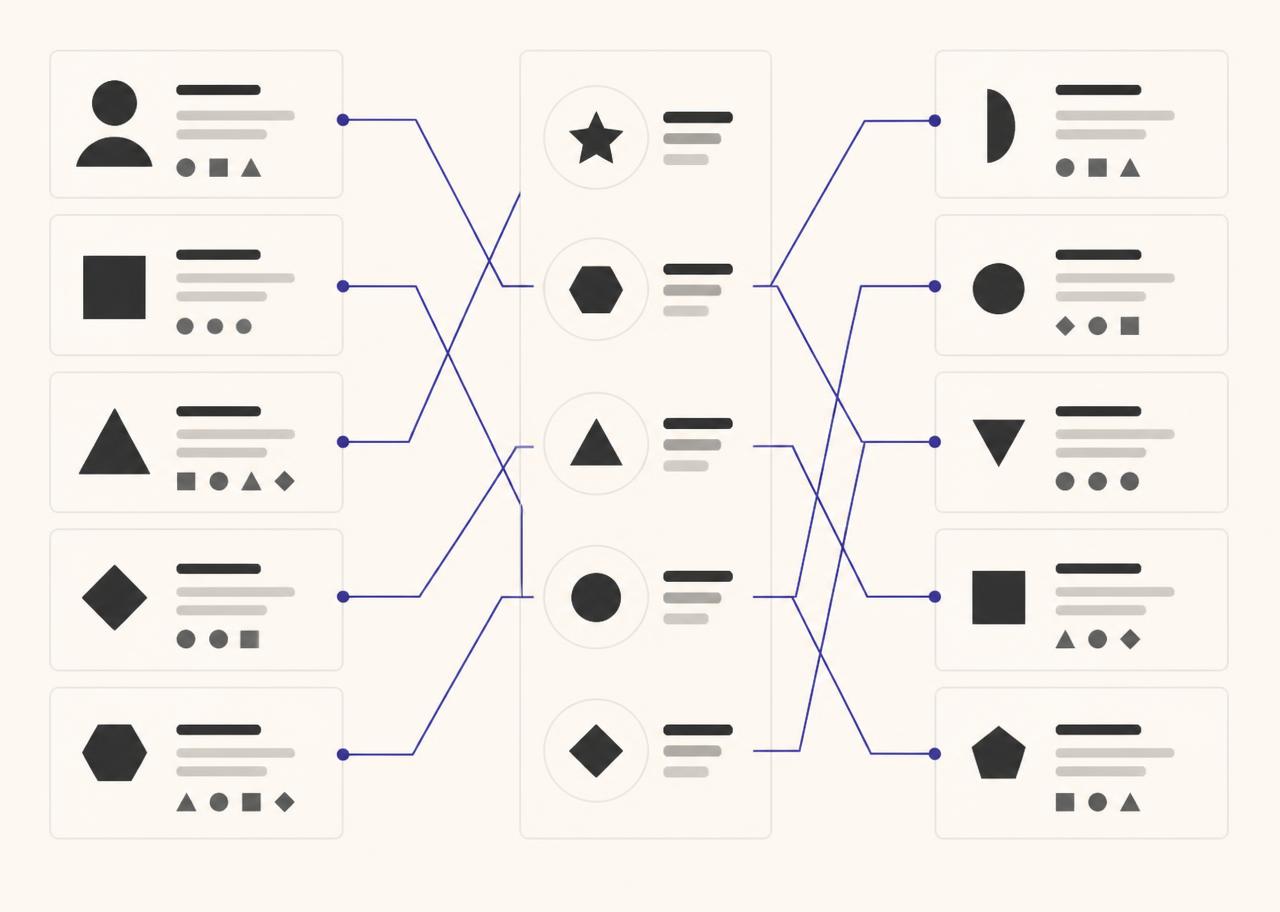
The platform makes institutional talent discoverable: structured professional profiles on one side, project and organisational needs on the other, and a matching layer between them.
The Challenge
Expertise inside a large institution is real but invisible. Teams recruit through personal networks because there is no shared, structured representation of skills and availability.
The design challenge was to make profile creation worth the effort while keeping matching legible to both sides.
Users & Stakeholders
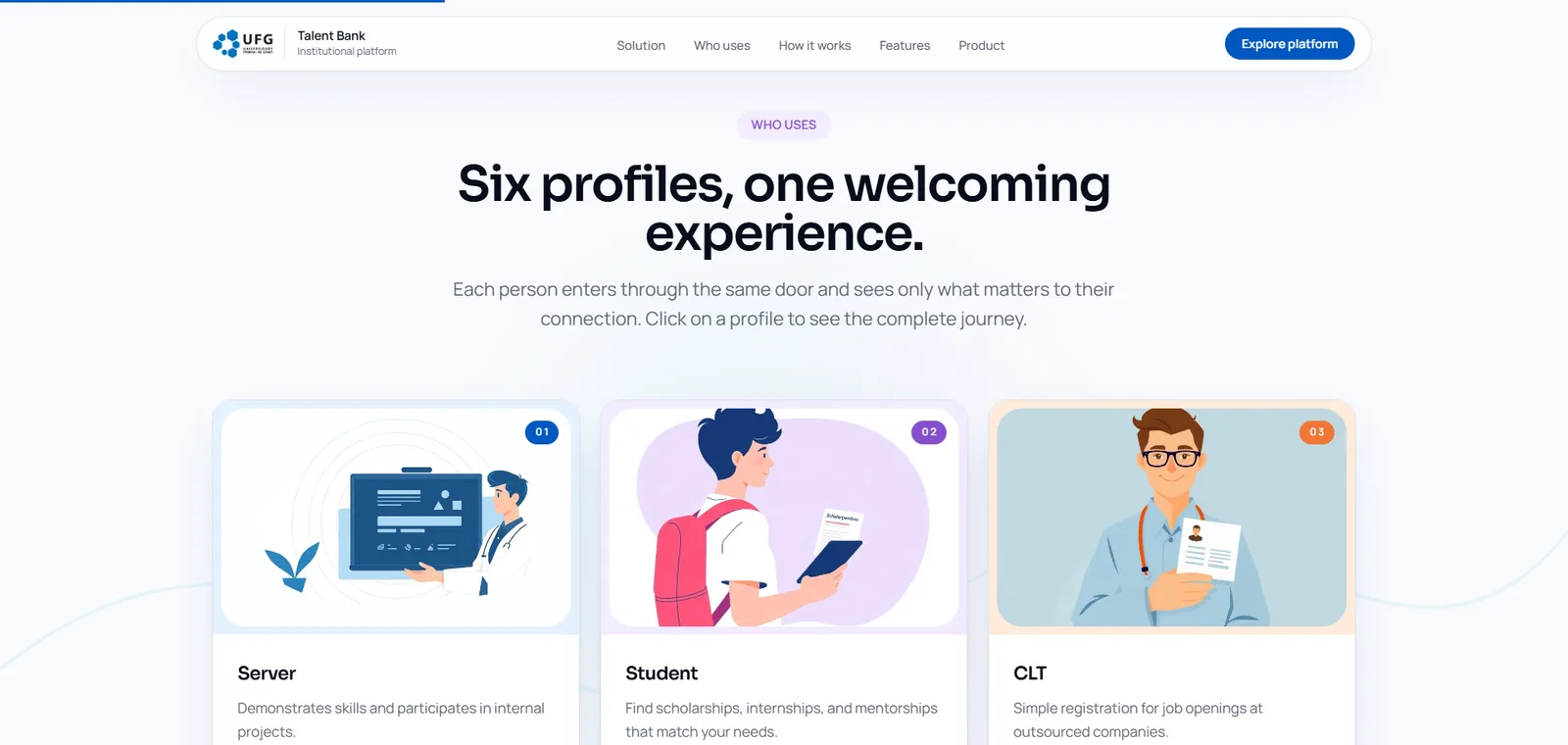
- Professionals and students building profiles
- Project teams and units describing needs
- Institutional administrators managing the ecosystem
Product Strategy
Profiles were designed as structured data rather than free text, so matching could be explainable and search could stay precise across a very heterogeneous population.
Information Architecture
A shared skills and domains vocabulary connects profiles, opportunities and search, allowing several distinct journeys to operate on the same underlying model.
User Flows
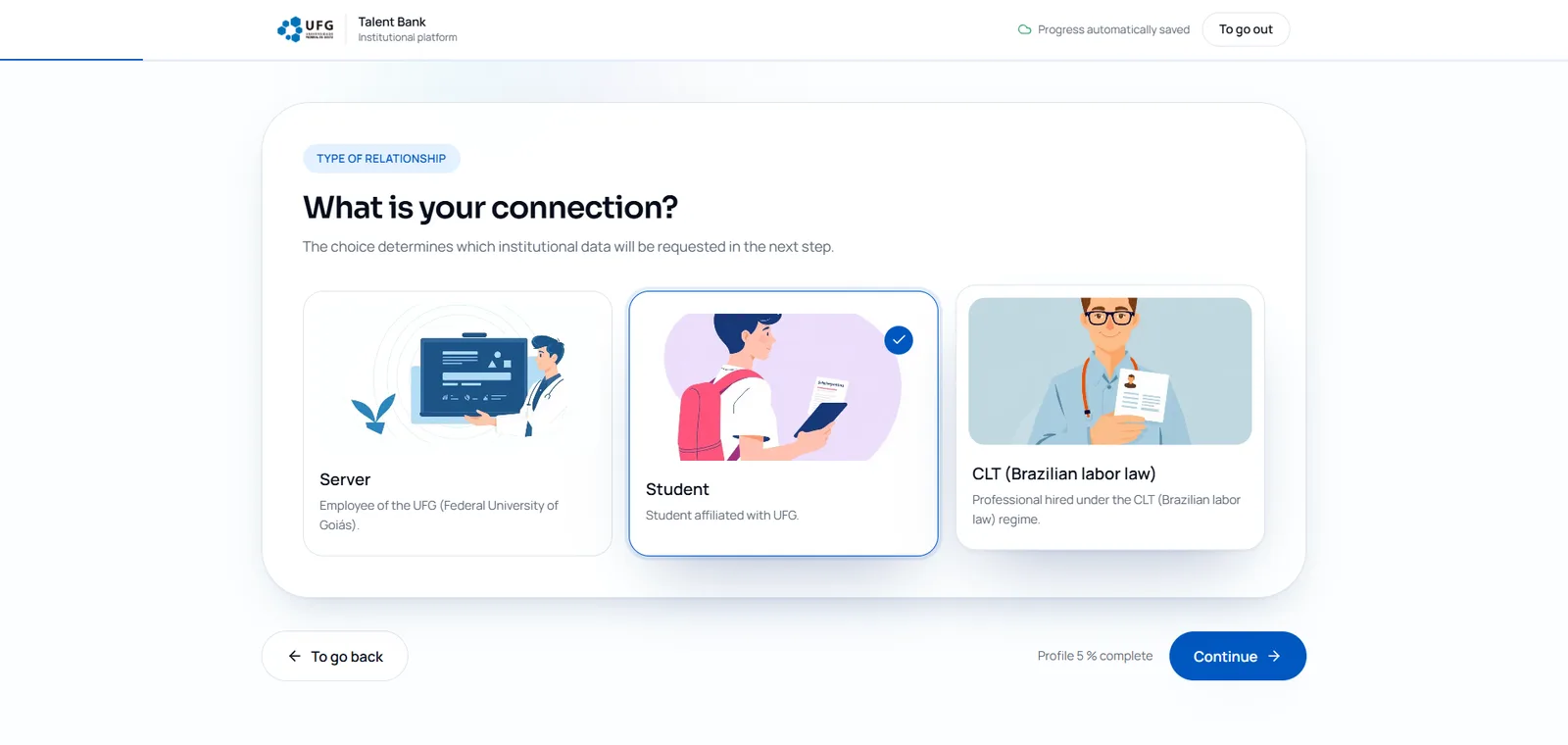
Onboarding is progressive: a usable profile first, depth later. Opportunity creation mirrors the same vocabulary so both sides describe work in comparable terms.
Key Design Decisions
- Progressive onboarding with visible profile completeness
- Structured taxonomy instead of free-form skill entry
- Matches presented with the reasons behind them
- Role-specific navigation over one generic dashboard
AI / Human-AI Interaction
Matching is presented as a ranked, explainable recommendation that people can refine — not an automatic assignment.
What collaborators say
I had the pleasure of doing the final work of the product designer course with Ayrton. He is an agile and practical person. He knows how to motivate and direct his teammates. Ayrton has the essential characteristics of a good leader and a great designer.
Design System
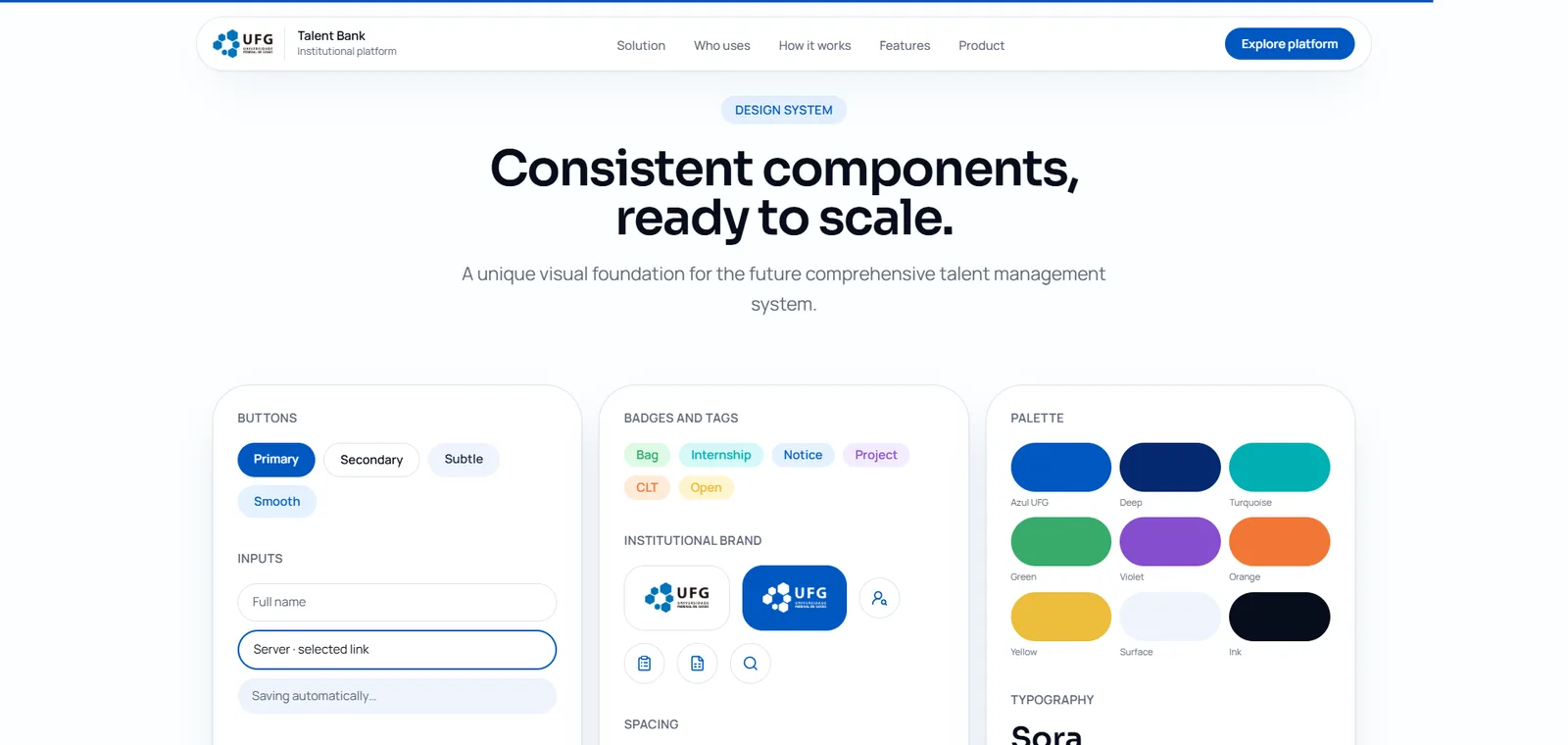
A component system covering profiles, forms, taxonomies, search and listing patterns supports the platform's institutional scale and multiple roles.
Accessibility
Long structured forms were designed with clear labels, grouped fieldsets, keyboard-friendly controls and accessible error handling.
Impact & Results
- Designed for a heterogeneous university population, from students to established professionals
- Institution-wideDesigned for a heterogeneous university population, from students to established professionals
- Free-text skill descriptions replaced by a shared taxonomy that makes matching explainable
- Structured profilesFree-text skill descriptions replaced by a shared taxonomy that makes matching explainable
- Profile creation and opportunity creation designed around the same vocabulary
- Two-sided journeysProfile creation and opportunity creation designed around the same vocabulary
Learnings
In multi-sided institutional products, a shared vocabulary is the real product. Interface quality depends on how well both sides describe the same thing.
Screens & Flows