Case 01 · SCM.ai — AI · Compliance · Regulatory Tech
Designing AI for Regulatory Cost Analysis
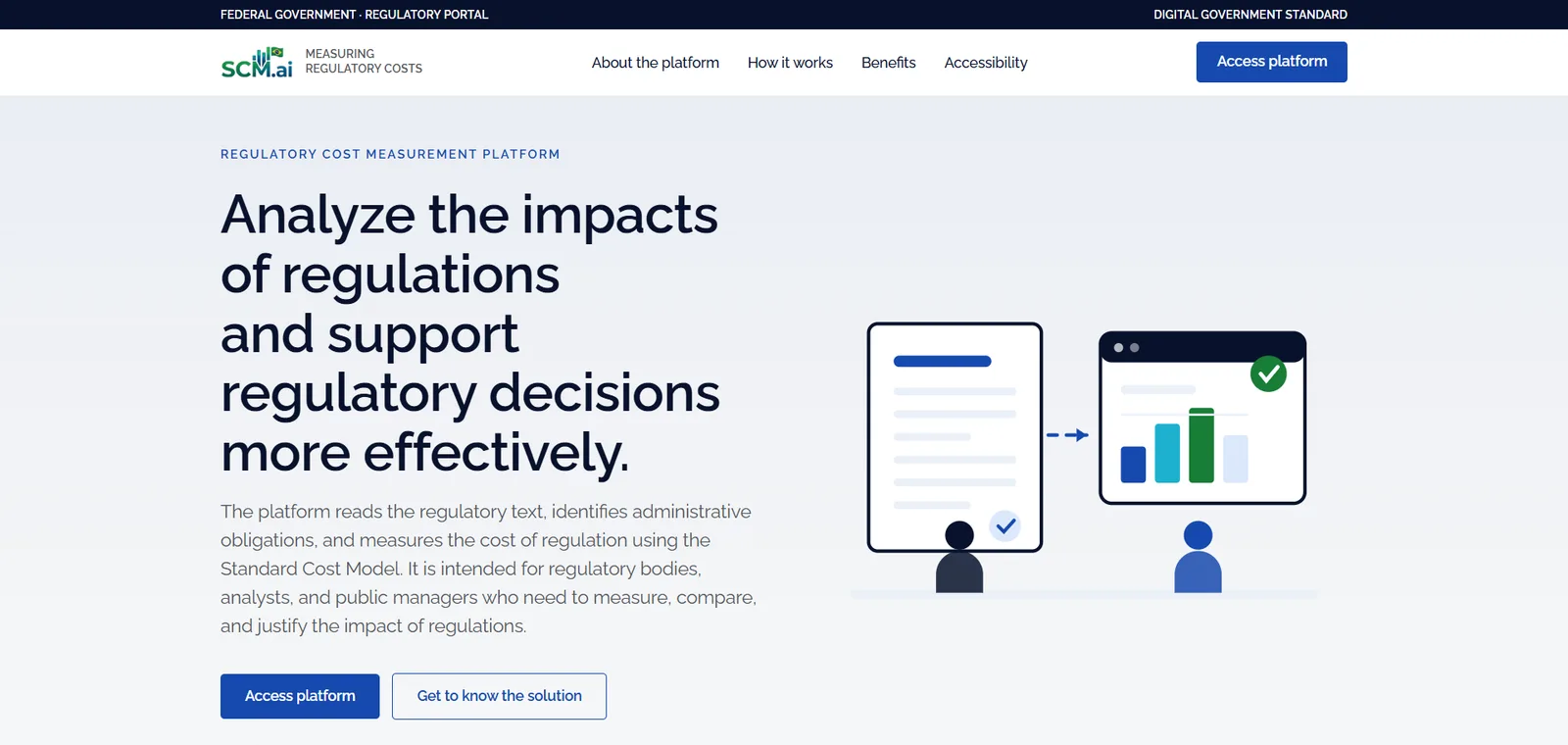
An AI-powered compliance platform that helps expert analysts interpret dense regulatory text, identify obligations and measure the administrative cost they create.
- Role
- Lead Product Designer
- Category
- AI · Compliance · Regulatory Tech
- Status
- Designed and developed · currently in final testing
- Project
- Visit project Interface in Portuguese — built for Brazilian public-sector institutions
- AI
- NLP
- Regulatory Technology
- Compliance
- Data
Overview
SCM.ai is a high-stakes compliance product: it supports expert analysts in reading dense regulatory text, identifying administrative obligations and estimating the cost those obligations create for the organizations and people affected by them. It is used by a regulatory institution in Brazil.
I led the product design work: from problem framing and information architecture to the interaction model for AI-assisted analysis, the design system and accessibility decisions.
The Challenge
Regulatory cost analysis is slow, highly manual and dependent on expert interpretation. Analysts move between long normative texts, internal methodologies and spreadsheets, holding a large amount of context in their heads — with results that must survive external scrutiny.
The design challenge was to introduce AI into that workflow without removing the analyst's authority over the result.
Context
The product sits at the intersection of law, public administration and data. Every output can be questioned publicly, so traceability between a legal excerpt and a calculated cost is a product requirement, not a nice-to-have.
Users & Stakeholders
The product serves several distinct profiles with different levels of technical and methodological expertise.
- Regulatory analysts performing the assessment
- Methodological reviewers validating results
- Institutional decision-makers reading consolidated outputs
- Citizens and organizations as the public audience for transparency
Product Strategy
The strategy was to treat AI as an accelerator inside an expert workflow rather than an autonomous decision engine. The interface proposes; the analyst decides.
This framing shaped the whole product: suggestions are always editable, always attributable to a source excerpt, and always reversible.
Information Architecture
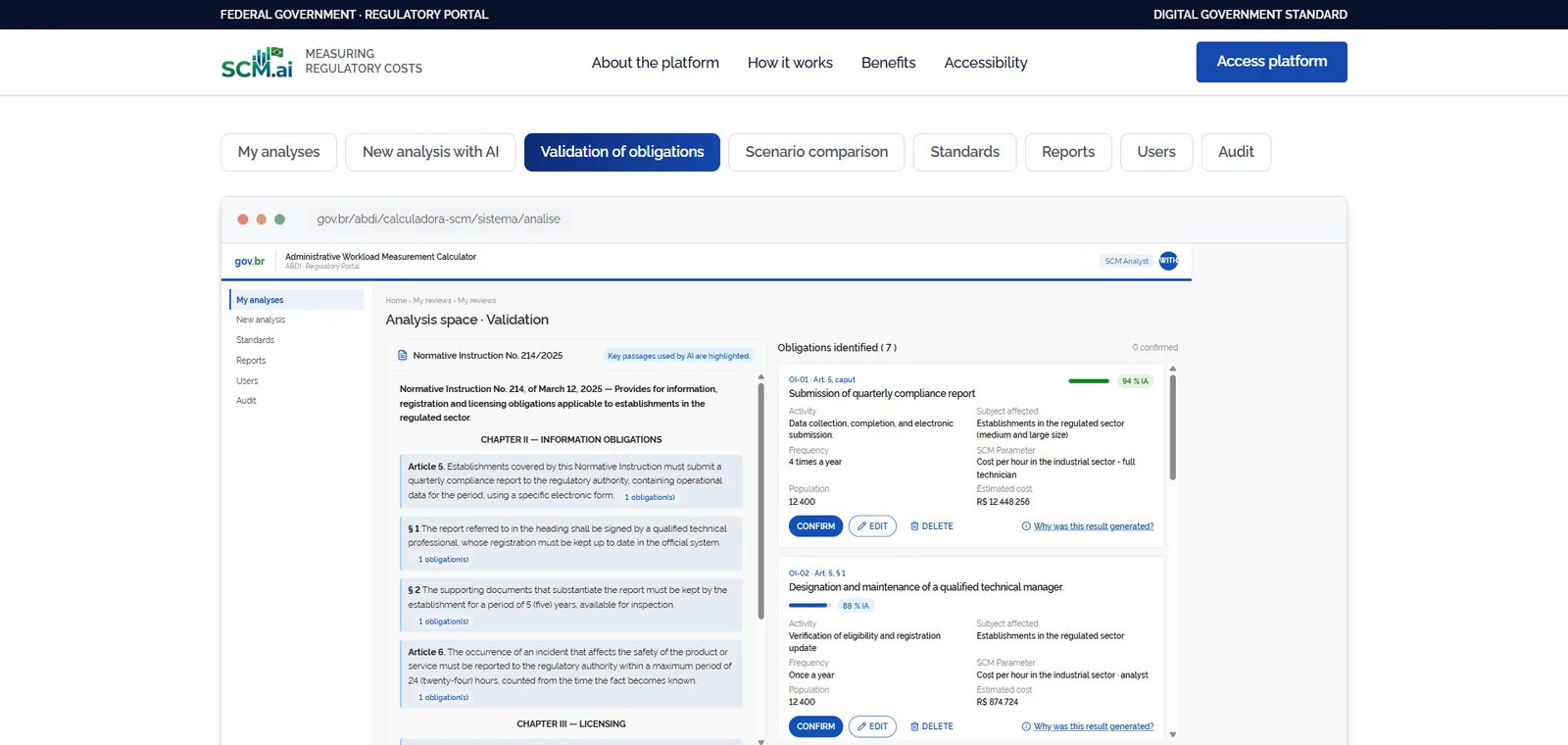
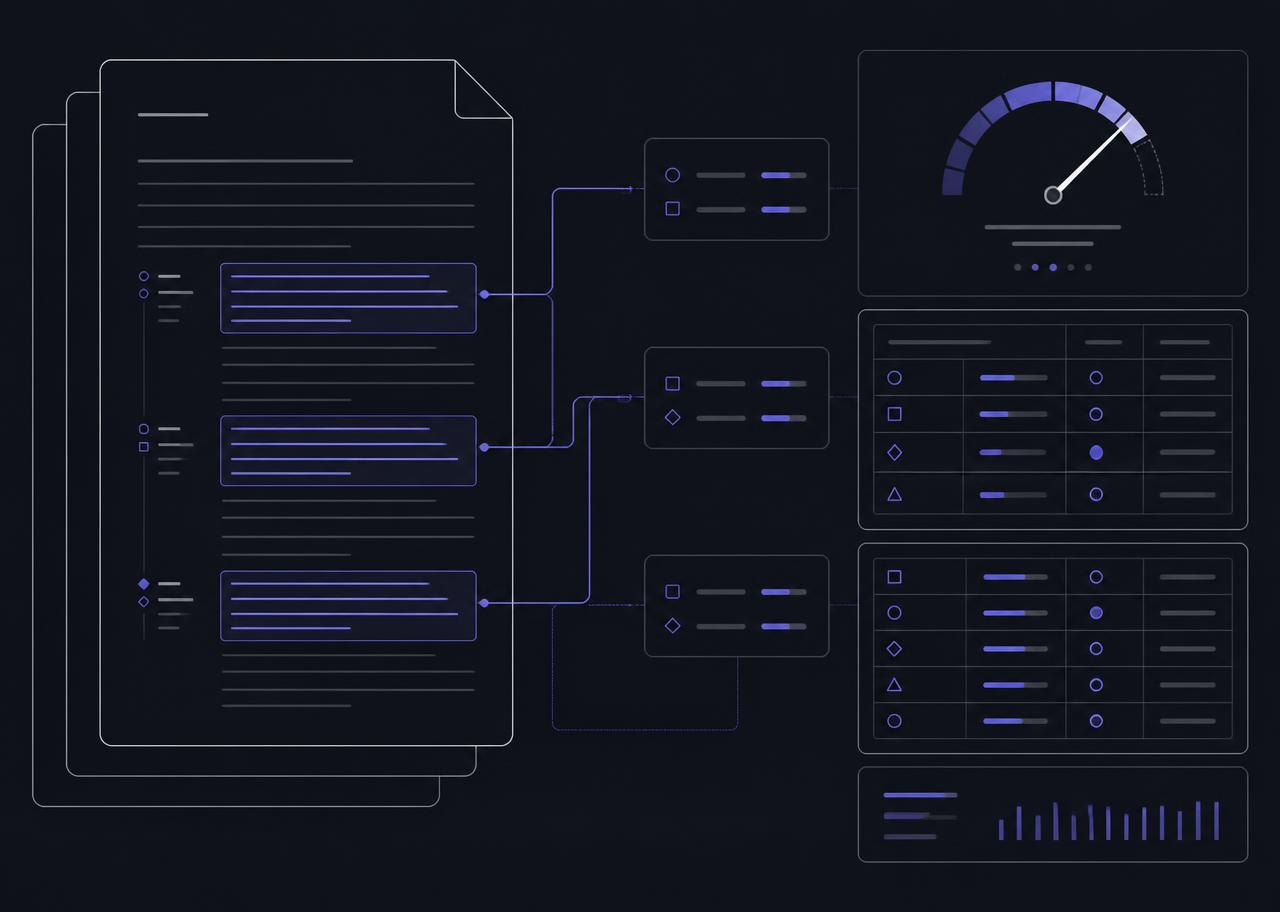
The architecture separates the normative text, the extracted obligations and the cost model into three linked layers, so an analyst can always move from a number back to the sentence that generated it.
User Flows
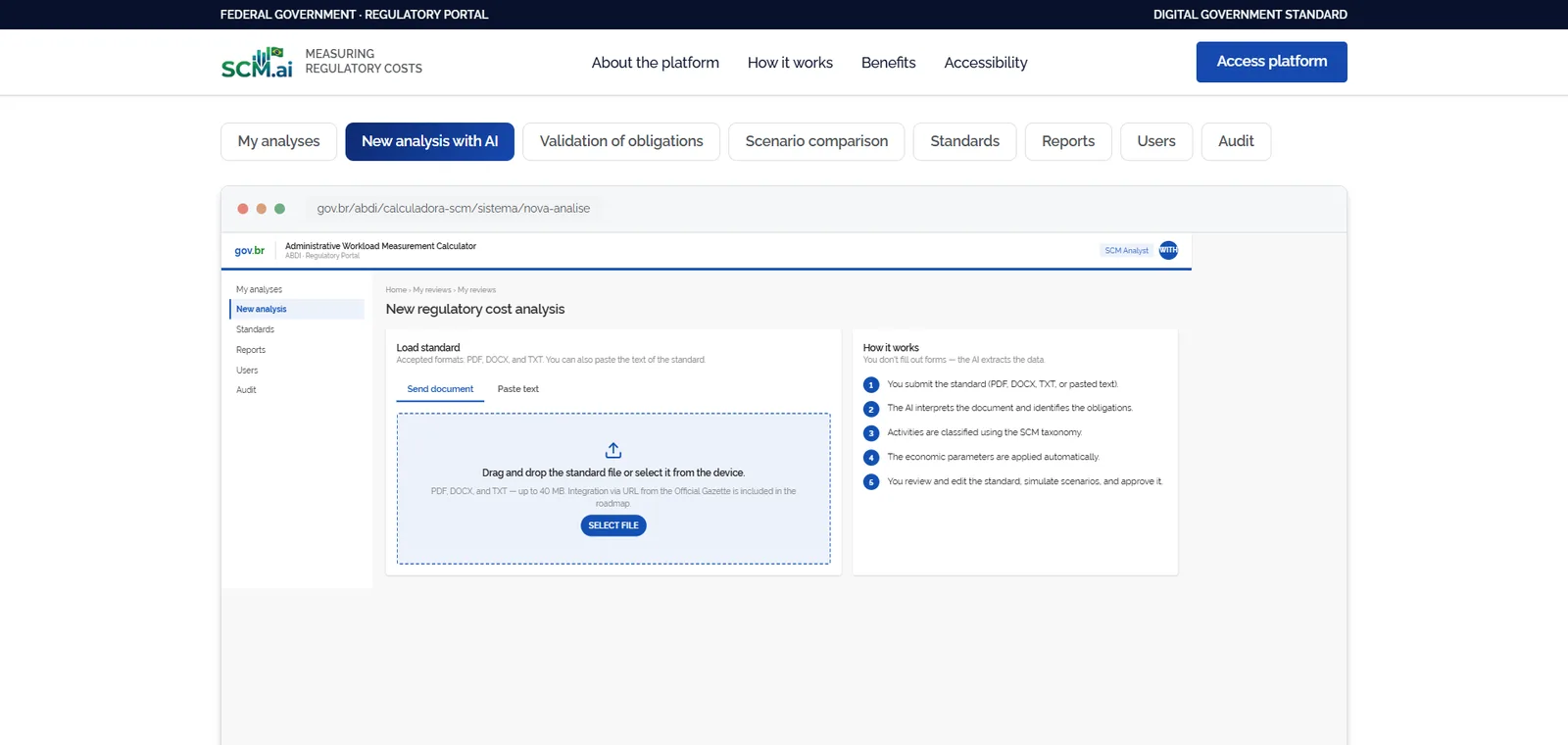
The core flow moves from importing a normative text, to reviewing AI-extracted obligations, to parameterising each obligation, to reviewing consolidated costs and exporting the analysis.
Key Design Decisions
- Every AI suggestion is anchored to its source excerpt
- Editing an AI output is a first-class action, not an exception path
- Progressive disclosure for methodological parameters
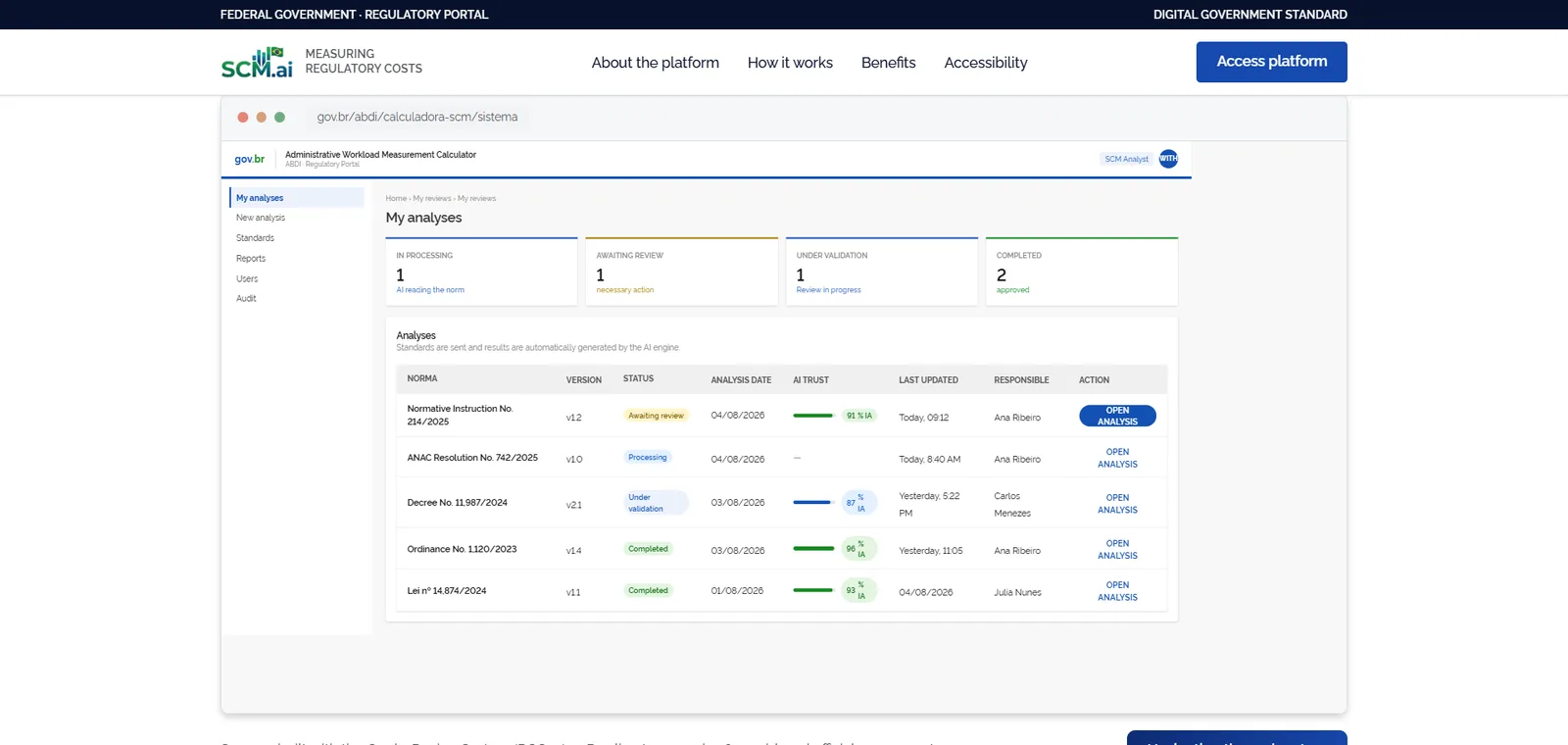
- Consistent review states so responsibility is always visible
AI / Human-AI Interaction
AI-generated content is visually and semantically distinguished from validated content. Nothing enters a final analysis without an explicit human validation step, and the interface communicates the difference between a proposal and a decision.
Design System
I designed a component library covering data-dense tables, review states, annotation patterns and form controls for methodological parameters, so new modules could be added without redesigning core interactions.
Accessibility
A product of this reach must be usable by everyone. The interface was designed for keyboard operation, visible focus, sufficient contrast, meaningful heading structure and non-colour-dependent status communication.
Final Product
The platform has been designed and developed and is currently in a testing / homologation environment.
Impact & Results
- Every calculated cost can be traced back to the exact legal excerpt that generated it
- Traceable by designEvery calculated cost can be traced back to the exact legal excerpt that generated it
- No AI suggestion enters a final analysis without explicit analyst validation
- Human-in-the-loopNo AI suggestion enters a final analysis without explicit analyst validation
- Designed for a domain where every output can be publicly questioned and must hold up to review
- Built for scrutinyDesigned for a domain where every output can be publicly questioned and must hold up to review
Learnings
In regulated domains, trust is an interface problem. Explainability, traceability and reversibility were more valuable to users than automation coverage.
Screens & Flows