Case 02 · GECAP — AI · Case Management · Complex Operations
From 2,000+ Public Health Projects to an AI-Powered Knowledge Platform
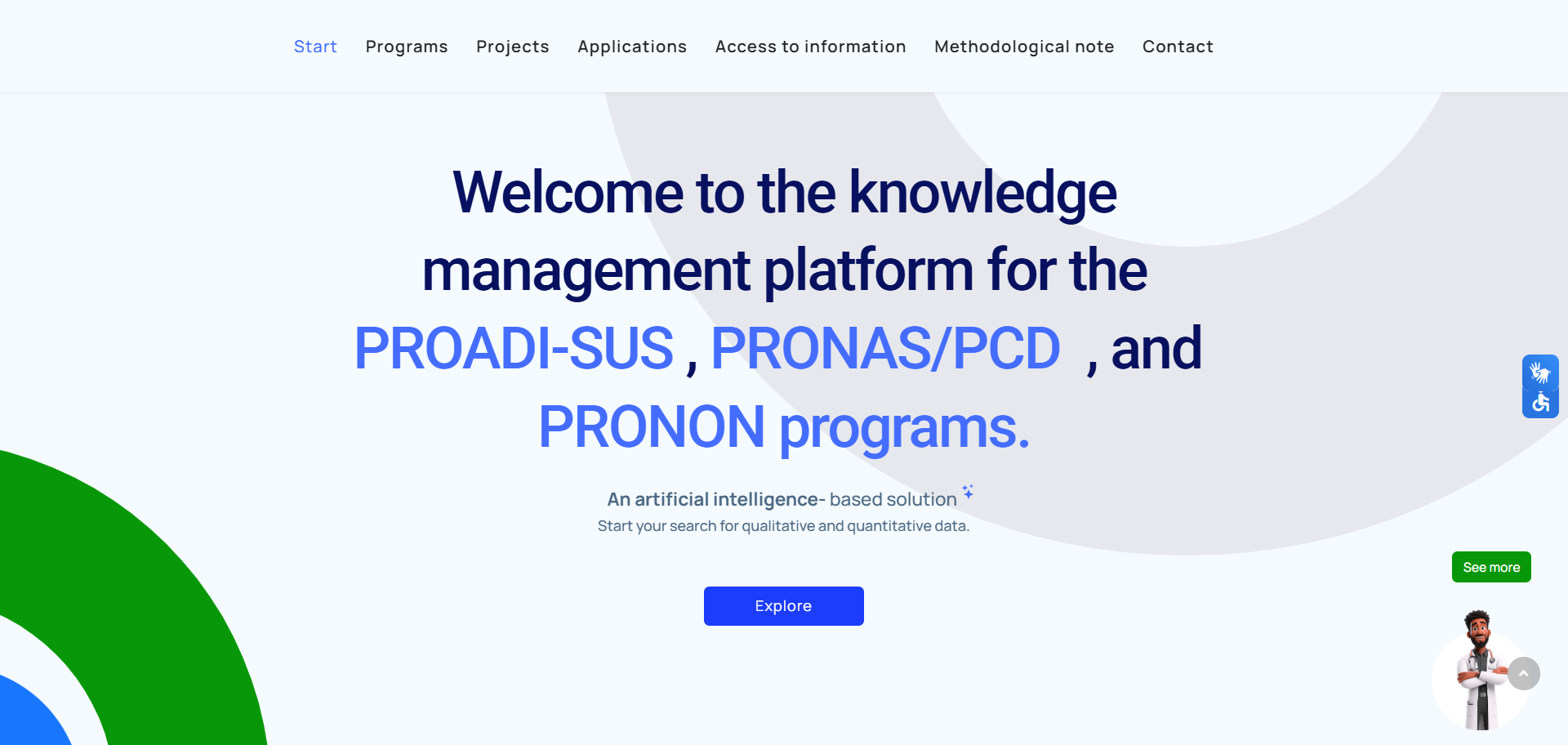
An AI-powered knowledge platform designed to make thousands of heterogeneous health projects searchable, comparable and verifiable for the teams that operate them.
- Role
- Product Designer
- Category
- AI · Case Management · Complex Operations
- Status
- Designed and developed · currently in a testing environment
- Project
- Visit project Interface in Portuguese — built for Brazilian public-sector institutions
- AI
- Knowledge Management
- Public Health
- Data Visualization
- Search
Overview
GECAP turns a large, fragmented archive of health projects into a navigable knowledge base, combining structured search, natural language interaction and data visualisation. The archive belongs to a national health programme, which makes provenance and comparability product requirements.
The Challenge
Thousands of projects existed as documents and records with inconsistent structure. Professionals could not answer basic questions about what had already been done, where, and by whom.
The challenge was designing for two different kinds of question: precise quantitative queries and open qualitative exploration.
Context
The platform supports knowledge management across a national public health programme, where institutional memory is distributed and rarely comparable between regions.
Users & Stakeholders
- Public-sector professionals and programme managers
- Researchers looking for prior work and comparable initiatives
- Institutional stakeholders needing consolidated overviews
Product Strategy
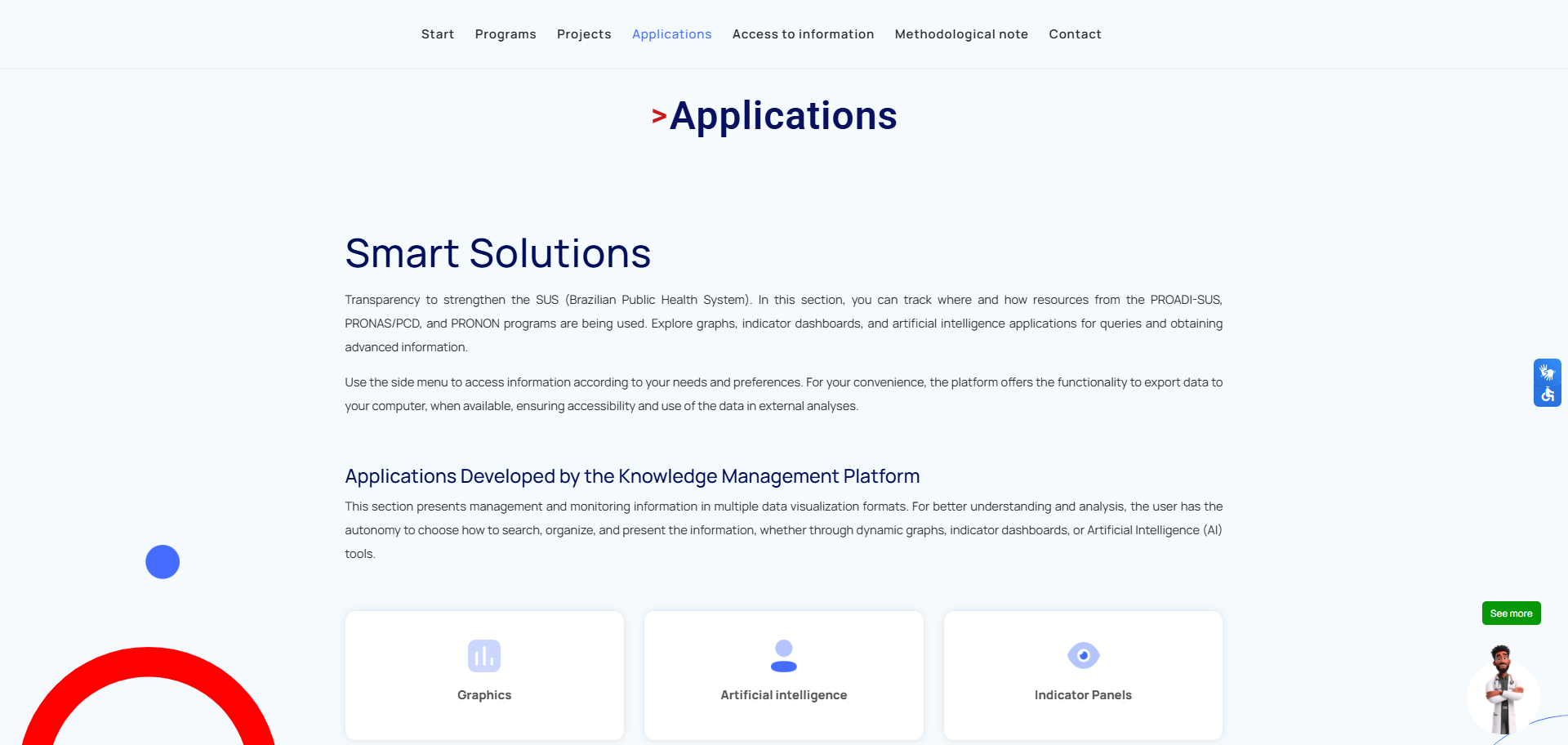
Rather than choosing between a dashboard and a conversational interface, the product connects both: aggregate views for orientation, natural language for specific questions, and record-level detail for verification.
Information Architecture
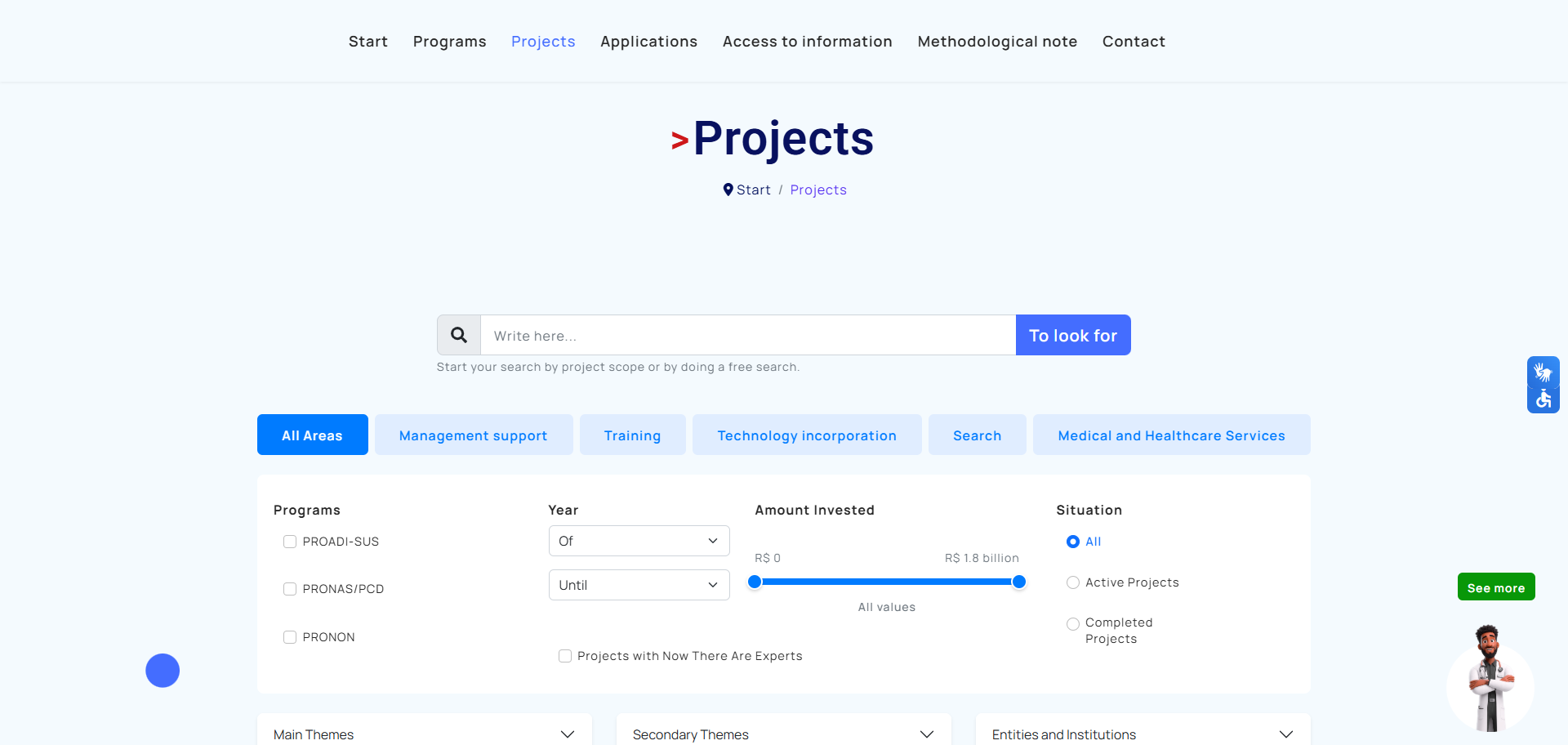
The architecture organises projects by programme, theme, territory and time, and keeps every aggregate view one step away from the underlying records.
User Flows
Users can enter from a question, from a filter, or from a visualisation, and always land on comparable project records.
Key Design Decisions
- Answers always cite the records they were derived from
- Filters and natural language operate on the same result set
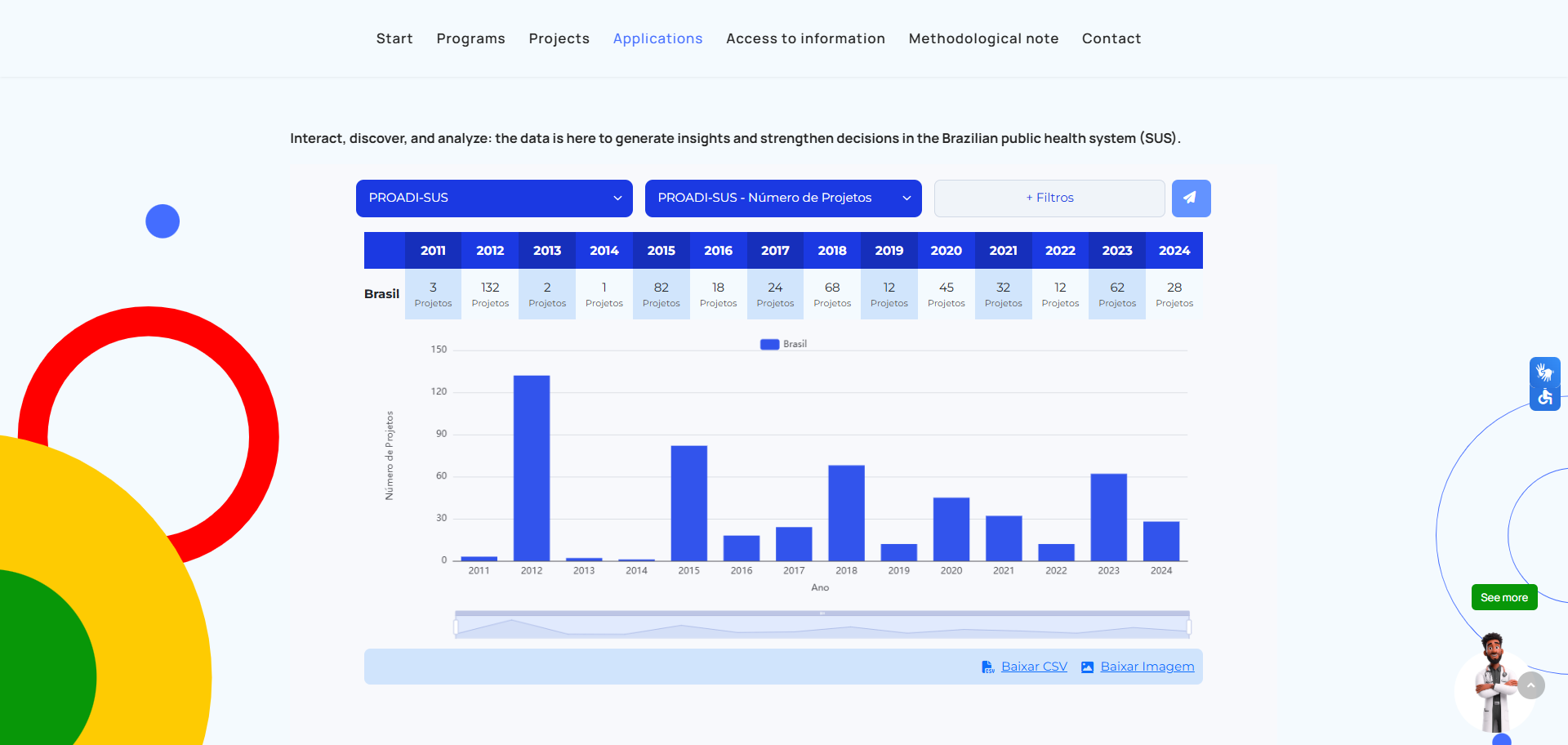
- Data visualisations are entry points, not endpoints
- Empty and partial-data states are designed explicitly
AI / Human-AI Interaction
AI search is framed as an assistant for exploration. The interface shows what the system understood from a question and lets users adjust the interpretation, keeping the underlying records visible and verifiable.
What collaborators say
Ayrton is an excellent professional, always very creative and responsible. In addition to all his qualities, he is very proactive and committed to the development of his work.
Design System
Shared components for search, filtering, result cards, charts and record detail keep a large information surface visually calm and predictable.
Accessibility
Charts are paired with tabular equivalents, results are keyboard navigable, and colour is never the only carrier of meaning.
Impact & Results
- Scale of the public health project archive the platform was designed to make navigable
- 2,000+ projectsScale of the public health project archive the platform was designed to make navigable
- Structured filtering and natural language questions operating on the same result set
- Search + dialogueStructured filtering and natural language questions operating on the same result set
- Every AI answer designed to cite the project records it was derived from
- Traceable answersEvery AI answer designed to cite the project records it was derived from
Learnings
With heterogeneous data, the honest representation of gaps and uncertainty is as important to design as the representation of results.
Screens & Flows