Case 04 · SINAPIR — GovTech · Public Policy · Civic Technology
Designing Inclusive Digital Services for Government
A digital government experience designed to collect structured information from local governments and support the implementation and monitoring of public policies.
- Role
- Product Designer
- Category
- GovTech · Public Policy · Civic Technology
- Status
- Designed and developed · currently in a testing environment
- Project
- Visit project
- GovTech
- Public Policy
- Data Collection
- Inclusive Design
Overview
A digital service that guides local government bodies through submitting structured information used to implement and monitor a national public policy.
The Challenge
The underlying process is bureaucratic: many requirements, institutional vocabulary and long forms completed by people who are not full-time system users.
The design task was to turn a compliance obligation into a guided, understandable experience.
Context
Users are distributed across very different administrative realities, from well-resourced bodies to small teams with limited technical support and connectivity.
Users & Stakeholders
- Local government staff submitting information
- Policy teams reviewing submissions
- National coordination bodies monitoring implementation
Product Strategy
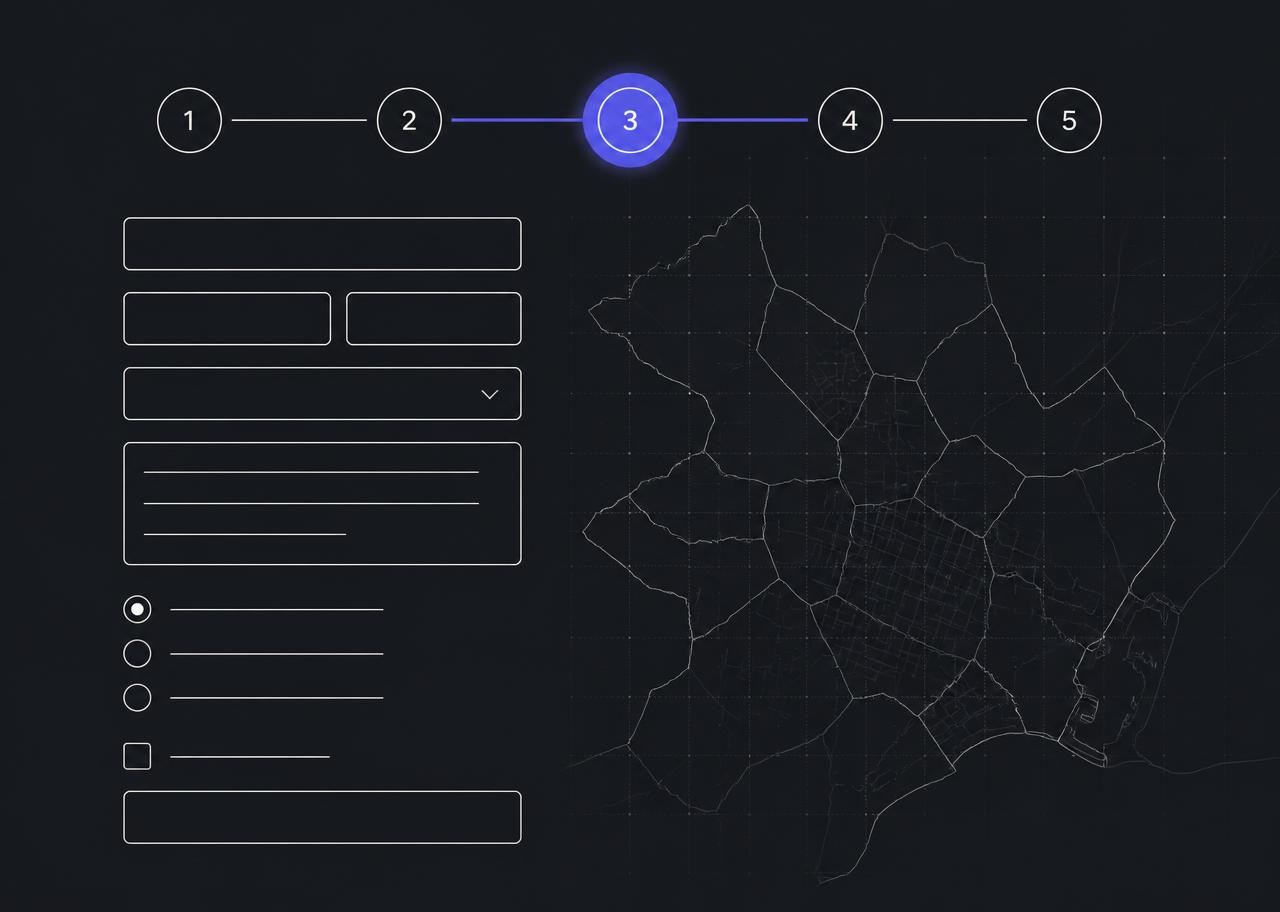
Instead of reproducing the administrative form, the experience was restructured as a wizard: one decision at a time, plain-language explanations, and saved progress so submissions can be completed collaboratively over time.
Information Architecture
Requirements were grouped into thematic stages that follow how institutions actually gather information internally, rather than the order of the original document.
User Flows
A step-based flow with explicit progress, review before submission, and the ability to resume incomplete submissions.
Key Design Decisions
- Wizard structure with persistent progress and save states
- Plain-language guidance next to each requirement
- Validation that explains, rather than blocks
- Review screen before final submission
Accessibility
Accessibility drove the form design: semantic structure, associated labels and help text, keyboard operability, visible focus, accessible error messaging and high contrast.
Learnings
In digital government, clarity is inclusion. Reducing interpretation effort had more impact on completion than any visual refinement.